Cults don’t need compounds, robes, or a man with a microphone. The most effective ones don’t lock you in from the outside. They live in your own mind.
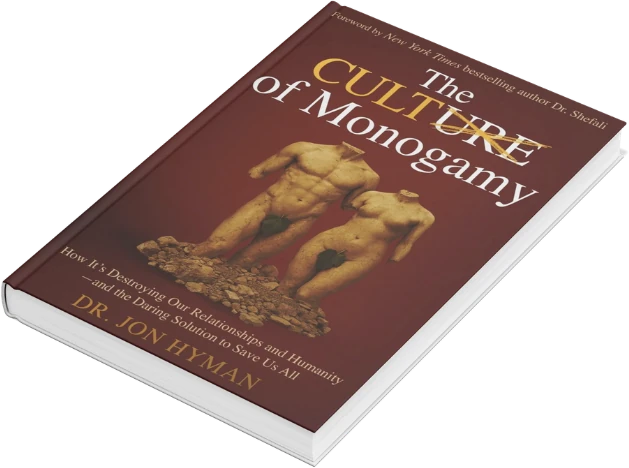
Last spring I said the title of my book out loud at a dinner party. I know better now.
A woman across the table set down her fork. She had been married twenty-two years, she told me, and she wanted everyone present to understand that she was not in a cult. Her tone was perfectly pleasant. Her hand was not steady. Someone laughed to move things along, the host asked about a kitchen renovation, and that was the end of it.
Except it wasn’t. An hour later she found me at the sink, drying glasses, and said something she had not said at the table. She had not wanted to sleep with her husband in four years. She loved him. She had never told anyone, including him.
Then she asked me: “So is that the cult, or is that just me?”
I have been asked some version of that question in kitchens and hallways and hotel lobbies for years now, always privately, never in front of the group. Her reaction at the table and her question at the sink are the same piece of evidence.
Let’s start with the reaction, because I already know you had one.
Something tightened when you read the word “cult.” Especially if you’re in a relationship you’d describe as loving, or committed, or sacred. A cult? That’s a stretch. Cults are strange men in robes on compounds in the desert. I chose my partner. She chose me. Nobody brainwashed anybody.
I understand that reaction completely. I’d be more concerned if you didn’t have it. We all resist when something threatens what we believe to be true, and we resist much harder when it starts to unsettle who we believe ourselves to be. That’s not stubbornness. That’s self-protection, and it’s working exactly as designed.
But notice what the objection assumes. It assumes a cult requires a leader.
We’re looking for the wrong thing
Here is what we’ve been taught about cults: they are obvious. Dramatic. Geographically contained. There’s a charismatic figure, an isolated compound, a set of beliefs so strange that outsiders can spot them instantly. Which means we’ve been trained to identify cults by their weirdness.
What we were not taught is that the most powerful ones are the ones nobody recognizes as cults at all. They don’t need a compound, because the belief itself does the containing. They don’t need a leader, because the belief becomes the only leader required.
And if monogamy has a leader, it isn’t a guru. It’s society itself. Religion, media, law, family, tradition, all braided together, all repeating the same story generation after generation until it stops feeling like conditioning and starts feeling like the way things are. At which point monogamy is no longer a belief anyone adopted. It’s a truth nobody thought to question.
So let’s stop arguing about the word and run the checklist instead. Cult researchers use a fairly stable set of markers. Eight of them show up in almost every framework. I’m going to walk through them one at a time. Judge for yourself.
Love bombing
Cults flood new members with validation and reward at the moment of entry. Overwhelming affection, ritual, belonging, a sense of having been chosen.
Now describe a wedding. This is nuclear level love bombing, a frenzied mob of lob bombing.
The dress, the toasts, the ceremony that costs more than most people’s cars, the diamond marketed as literally eternal, the fairy tale we start telling children before they can read. These are emotional surges engineered to deepen commitment at exactly the point where commitment is being made. Monogamy doesn’t seduce us into surrendering autonomy by hiding what it wants. It throws a party.
Control through shame
Cults convince members that their nature is flawed and that only obedience can redeem it.
Monogamy teaches us that our sexual desires are impure. That wanting anyone else is a moral failure requiring correction. That the correction is compliance. Notice how much of the emotional vocabulary around desire is borrowed from sin, filthy, unfaithful, clean, pure, temptation. That’s not accidental.
Take shame out of the system and the control collapses within a generation. Which is why the shame is not incidental. It’s structural.
Submission and compliance
In monogamy, your sexuality is legally and emotionally chained to one other person’s. WedLOCK, locks your sexual opportunity down and funnels it only in one direction, forever. You’re expected to match their level of desire, or to suppress your own until it matches. If your appetite is higher, you’re a problem. If it’s lower, you’re withholding.
Step outside and you’re not merely disappointing. You’re treasonous. Morally bankrupt. We have a whole vocabulary for it.
Enforced compliance, presented as commitment. Sold as intimacy.
Exclusivity and the fear of outsiders
Every cult runs on us-versus-them. So does the couple. It’s us against the world. Bonnie and Clyde, the Dynamic Duo.
Attraction to anyone outside the unit is framed as a form of betrayal, not acting on it, feeling it. Which makes secrecy compulsory. Not because people are dishonest, but because there is no safe place to put the truth. Cults teach members to fear outsiders. Monogamy teaches us to fear outsiders and our own interior life, and I’d argue the second fear does more damage than the first.
Social condemnation
Deviate and you’re punished. Not metaphorically. The consequences of leaving the cult are severe. So it is with monogamy.
Divorce is engineered to be socially, financially, and psychologically expensive. People who explore other structures get labeled hedonists, cheaters, or broken. You stray, and you risk losing your reputation, your money, your family, your community, your job, your E V E R Y T H I N G. The judgment functions as a wall you can’t see and can’t climb, and it does the work that a compound fence does elsewhere.
Criminalization
This is where the comparison stops being a metaphor.
As of this writing, adultery remains a crime in some states. In a number of countries it can still carry a death sentence. Premarital sex has been prosecuted within living memory across much of the world. These laws do not primarily exist to punish behavior. The enforcement rate is far too low for that. They exist to instill fear. And fear works long after love has gone silent.
Propaganda at scale
Media, advertising, and film glorify monogamous love continuously while framing every alternative as chaos or comedy. Monogamy is baked into the tax code. It’s baked into insurance. It’s baked into the last forty romantic comedies you’ve seen, all of which resolve identically.
No force is required when the exposure is constant. Repetition is the whole mechanism.
Religious reinforcement
Doctrine promotes monogamy from a practice to a divine ideal. Ritual reinforces it weekly. Dissent is framed not as a different preference but as a betrayal of a higher purpose. Every cult that has ever operated has used exactly this move, and monogamy has had several thousand years to perfect it.
Eight for eight
Love bombing. Shame. Enforced submission. Exclusivity. Social punishment. Criminal punishment. Mass propaganda. Divine mandate.
If a group you’d never heard of ran all eight of those plays, you would not hesitate for a second about what to call it. The only reason monogamy escapes the label is that the group is everyone, the compound is the entire planet, and you were born inside.
That’s not a lesser cult. That’s a more successful one.
What the fear actually does
There’s one more marker, and it’s the one I find most damaging.
At the center of monogamism sits fear. Fear of abandonment. Fear of shame. Fear of being the kind of person who couldn’t manage it. And fear does something specific to desire: it silences it. Not the wanting itself, the telling.
So people stop being honest. Not with strangers, with the person they sleep beside. They edit. They omit. They construct a version of themselves that’s safe to present at home, and the real one goes somewhere else. It’s the same instinct as a child lying to a parent to avoid the disappointment, and it produces the same result, which is a relationship between two performances rather than two people.
Then we call that arrangement love, and wonder why it feels lonely.
We won’t honestly see that humans are scientifically proven to be, by their nature, a non-monogamous species, and one which has been compelled into secrecy about it. The cruel part is that the secrecy gets blamed on the individual. He lied, she hid it, they were dishonest people. But when a system makes honesty unsurvivable, secrecy isn’t a character trait. It’s the only available exit.
What I am not saying
I am not attacking love. Or trust. Or devotion. Or the person you’re building a life with.
I’m also not calling you brainwashed, which I know is what the word “cult” implies to most people. What I’m saying is narrower and harder to dismiss: a story this misaligned with our biology could not have survived five thousand years on its own merits. It required indoctrination to persist. And the fact that you can’t feel the indoctrination is not evidence against it. It’s the point. Water doesn’t feel wet to a fish.
You can run the checklist and still choose monogamy. Plenty of people will, and some of them will be happy.
But choose it with your eyes open. Are you living your truth, or faithfully repeating a story that was written long before you were born?
Now argue with me, and I mean that literally. Of the eight markers, which one do you think is the weakest, the one where I’ve stretched the comparison further than it goes? I’ll defend it or concede it in the thread.

0 Comments